
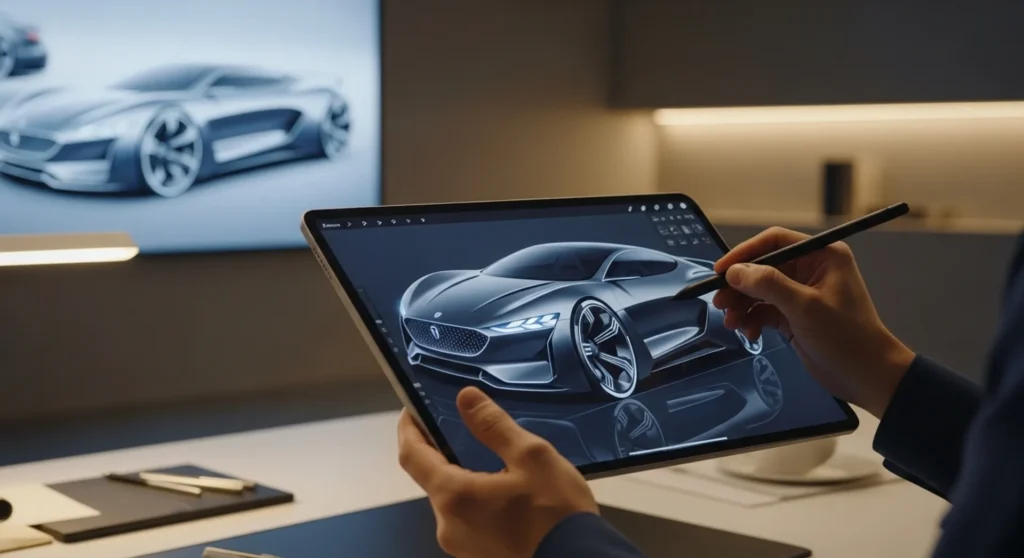
AI car design is one of the biggest creative shifts in automotive art right now. For years, car artists, wrap designers, illustrators, and custom builders relied on sketches, mood boards, and hours of revision to develop a final concept. That process still matters. However, artificial intelligence now gives creators a faster way to test ideas, explore shapes, refine themes, and visualize bold concepts before they move into production.
In 2026, this trend has moved far beyond hype. Automotive designers are already using AI tools to speed up concept development and explore new design directions. That matters for the wider car art community too. Custom styling, wraps, renders, posters, collector prints, and restoration concepts all benefit when artists can experiment more quickly and push visual boundaries without losing their personal style.
For a site like Cars Art, this topic fits naturally. Your blog already explores how technology shapes design, how personalization is changing automotive art, and how modern tools are transforming the culture around cars. AI is the next logical step in that conversation. It does not replace creativity. It changes how artists and designers build, test, and present ideas.
Why AI Car Design Has Become a Major Trend in Automotive Art
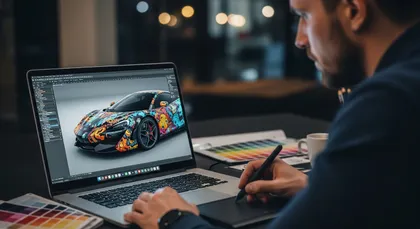
AI car design has gained momentum because it solves a real creative problem. Designers often need to explore many directions before they find the right one. That takes time. AI helps shorten the gap between concept and visualization.
Instead of waiting days to see one rough direction, an artist can generate several concept paths in a single session. They can test body lines, wheel styles, lighting themes, textures, and color combinations much faster. This does not eliminate the value of drawing skill or design knowledge. It simply gives creators another layer of speed and flexibility.
Why artists and designers are embracing AI tools
The rise of AI in automotive art is not happening in isolation. The wider automotive design world is already working through a fast-growing field of AI platforms and image tools. That means custom artists, concept creators, and visual storytellers are also adapting to the same shift.
Faster concept generation creates more creative options
One of the biggest strengths of AI car design is concept speed. A creator can start with a rough idea, such as a retro-futuristic coupe, a race-inspired restomod, or a dramatic electric hypercar, and then explore multiple visual versions quickly. That helps artists see what works before they commit to a final direction.
This speed matters in both commercial and personal projects. A wrap designer can show a client different themes sooner. A digital artist can refine a collector print faster. A builder planning a custom project can preview how a finished car might look before spending money on paint, vinyl, or fabrication.
That direction fits well with your existing content on Exploring the Intersection of Technology and Car Design and How Car Design Has Evolved: A Look at Classic and Modern Cars.
AI makes personalization easier to visualize
Personalization is one of the strongest themes in modern car culture. Enthusiasts want vehicles that reflect identity, taste, and imagination. AI helps by making those ideas easier to test visually. A customer can compare a subtle luxury concept with a bold street-art direction. A restomod owner can see several interpretations of one build before choosing the final design language.
This is especially useful in automotive art because many buyers struggle to picture abstract ideas. They may know they want something aggressive, elegant, futuristic, nostalgic, or race-inspired, but they cannot always describe it clearly. AI-generated mockups can bridge that gap and make creative conversations much easier.
That makes this topic a natural fit with Custom Car Artwork: The Growing Trend in Personalization and From Cozy Interiors to Art Cars: How Personalization Trends Are Redefining Car Art in 2025.
Where AI fits into the creative process
AI works best when artists use it as a creative partner, not as a shortcut that replaces judgment. Strong automotive art still needs taste, proportion, storytelling, and knowledge of car culture. Without that human layer, AI images often look flashy but shallow.
The best use of AI car design is usually at the beginning and middle of the workflow. It helps with brainstorming, visual exploration, theme building, and early presentation. After that, a skilled artist or designer still needs to shape the final outcome.
For example, a concept may begin with AI-generated renders, but the final piece might still require manual illustration, wrap adjustment, paint planning, print refinement, or brand-specific styling decisions. In other words, AI speeds ideation, but human taste still decides what deserves to move forward.
How AI Car Design Is Influencing the Future of Automotive Art
AI is not just making work faster. It is changing what people expect from automotive art. Audiences now want more detail, more originality, and more experimentation. They want to see cars reimagined in ways that feel cinematic, futuristic, or deeply personal.
That shift creates new opportunities for artists, content creators, and custom shops. Those who learn how to use AI well can build stronger presentations, offer more variations, and produce more compelling storytelling around a vehicle or concept.
How this changes custom builds, wraps, and restoration ideas
AI car design is already influencing how people imagine custom vehicles. Instead of thinking only in terms of paint color or wheel choice, enthusiasts now consider broader visual identities. They want themed builds, artistic narratives, and immersive design direction.
Custom wraps and art-driven builds gain a new design layer
Wrap design benefits a lot from AI-assisted concept work. Before a wrap goes to print, a designer can experiment with abstract graphics, motorsport-inspired shapes, color fades, heritage cues, or futuristic surface treatments. That makes the final product more intentional and less generic.
The same applies to art cars and show builds. An artist can test how a mural flows across body panels, how certain textures behave on curved surfaces, or how one theme connects from hood to side skirt to rear quarter. Those explorations would take much longer through traditional rough drafts alone.
This also pairs well with your post on E-Ink Car Wraps & Adaptive Surface Designs: The Future of Moveable Art, since both topics focus on how emerging technology changes the visual language of cars.
Classic cars can be reimagined without losing their identity
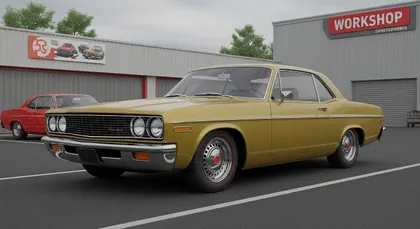
One of the most interesting uses of AI car design is in restoration and restomod culture. Artists can take a classic silhouette and explore several modern interpretations without touching the actual car. That makes it easier to test respectful updates before making physical changes.
A 1960s muscle car, for example, can be visualized with modern aero cues, fresh lighting signatures, or a contemporary race livery while still preserving its original character. That kind of experimentation can help owners decide whether to stay period-correct, go fully modern, or find a balanced middle ground.
This fits naturally with Classic American Muscle Meets Modern Fine Art and The Art of Car Restoration: Bringing Classic Cars Back to Life.
What artists should watch going forward
AI car design is growing quickly, but not every result is worth using. Artists still need standards. The strongest work will come from people who understand composition, automotive history, proportion, and what makes a design feel believable.
That means the future will likely reward hybrid creators. These are people who can use AI for speed, but who also know how to refine a concept with real artistic judgment. They can separate novelty from quality. They can turn a good prompt into a strong design direction instead of relying on random output.
There is also a bigger cultural shift happening. Automotive art is becoming more interactive, more digital, and more exploratory. People no longer want only finished images. They also want process, evolution, and transformation. AI supports that by letting artists show design journeys, alternative visions, and before-and-after creative development more clearly.
For readers who want an outside source on how AI is affecting the professional side of car design, Car Design News offers a strong look at how automotive designers are navigating the expanding AI tool landscape.
The bottom line is simple. AI car design is not killing automotive art. It is expanding it. Artists still need vision, taste, and strong ideas. What AI changes is the speed of exploration and the number of creative paths available. For custom car art, concept design, wraps, restorations, and collector visuals, that makes 2026 an exciting moment. The artists who learn how to use these tools without losing their own voice will be the ones who shape the next chapter of automotive creativity.