
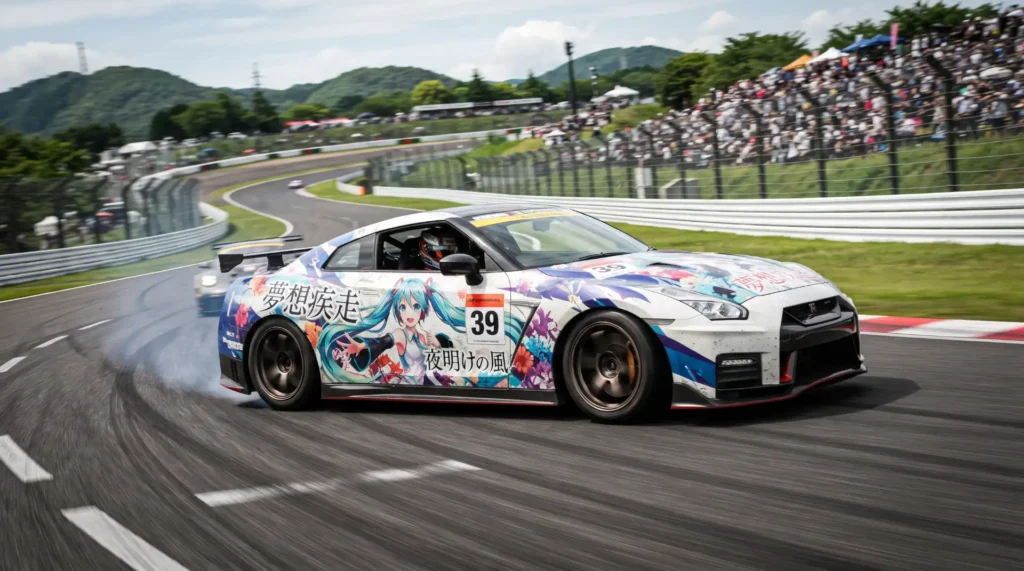
The American car modification scene has undergone several dramatic shifts over the past few decades. From the chrome-heavy boulevard cruisers of the late 1990s to the aggressive stance and tuner movements of the 2010s, automotive enthusiasts have always searched for fresh avenues to make their vehicles stand out. However, walking through a major car meet in California, Texas, or Florida today reveals a striking visual evolution that dominates asphalt everywhere: the unprecedented rise of custom anime car wraps.
What once existed as an ultra-niche Japanese subculture known as Itasha—literally translated to “painful car,” referencing the self-deprecating humor of spending immense sums to cover a vehicle in otaku artwork—has officially stormed into mainstream American automotive culture. In 2026, anime vinyl wraps are no longer confined to hidden underground car gatherings or dedicated comic conventions. They are proudly displayed on daily-driven sedans, high-end European supercars, drift missiles, track-built Japanese Domestic Market (JDM) legends, and even modern electric vehicles cruising American highways.
This massive shift is not an accident. It represents the intersection of generational shifts in car ownership, breakthroughs in wide-format vinyl printing technology, and a broader cultural movement where anime has transformed from an isolated hobby into a defining element of global youth identity. Understanding why custom anime car wraps are skyrocketing in popularity requires examining how art, technology, and community have merged on four wheels.
The Cultural Convergence: Anime as Modern American Expression
To understand the explosive demand for anime-themed vehicles in 2026, one must first recognize the dramatic shift in how anime is consumed across North America. Over the past decade, streaming platforms have catapulted Japanese animation into the absolute core of mainstream pop culture. Anime is no longer a late-night cable curiosity; it is a primary driver of global fashion, gaming, music, and now, automotive styling.
For the current generation of car enthusiasts—primarily Gen Z and Millennials—their childhood and young adulthood were shaped by iconic series like Naruto, Dragon Ball, Initial D, and Gundam, alongside modern mega-hits like Demon Slayer, Jujutsu Kaisen, and Cyberpunk: Edgerunners. As these enthusiasts have aged into stable careers and acquired their dream vehicles, they have naturally sought ways to combine their love for cars with their passion for story-driven art.
Traditional car customization often relied on paint jobs, classic racing stripes, or subtle color-change vinyls. While clean, these options frequently lack deep personal narrative. An anime wrap, by contrast, converts a car into a moving canvas that communicates a driver’s personality, favorite thematic stories, and artistic taste in an instant. A vehicle wrapped in a high-octane battle scene or a sleek cybernetic design signals membership in a shared global community. When two anime-wrapped cars pass each other on the highway, it creates an immediate bond between drivers that standard factory paint simply cannot evoke.
Furthermore, the rise of creator culture on platforms like TikTok, Instagram, and YouTube has accelerated this trend exponentially. Visually striking cars generate massive social media engagement. A thoughtfully designed anime wrap turns a standard vehicle into a content machine, attracting millions of views, photos at stoplights, and front-row parking at local meets. In a digital world that rewards bold individuality, anime wraps offer unmatched visual storytelling.
Technological Breakthroughs in Vinyl and Printing Technology
While cultural enthusiasm provided the spark, advanced chemical engineering and digital print manufacturing provided the fuel that made custom anime wraps practical for everyday vehicle owners. A decade ago, creating a full-color graphic wrap meant dealing with thick, difficult-to-install materials that faded quickly under harsh UV rays, peeled at the edges, and risked ruining the vehicle’s underlying factory clear coat upon removal.
In 2026, the wrap industry operates on an entirely different technological tier. Modern wrap shops utilize state-of-the-art cast vinyl films supplied by industry leaders such as Avery Dennison, featuring micro-cast air-release channels and pressure-activated adhesives. These materials allow professional installers to stretch graphic film seamlessly over complex compound curves, aggressive aerodynamic vents, and wide-body fenders without distorting the intricate artwork beneath.
High-definition wide-format latex and UV-curable printers now reproduce digital vector art with jaw-dropping clarity. Complex gradient transitions, fine line work inspired by traditional manga ink, and vibrant neon color palettes print at ultra-sharp resolutions without banding or pixellation.
Equally important are the protective laminate topcoats developed specifically for graphic vinyls. Modern over-laminates are infused with advanced UV blockers that protect deep pigment layers from intense sun exposure, preventing the premature fading that plagued earlier generations of printed wraps. Wrap shops now offer specialized finishes ranging from ultra-gloss and satin-matte to liquid metallic, iridescent, and holographic films. A driver can choose to laminate their anime wrap with a satin finish to give character line-art a smooth comic-book appearance, or opt for a metallic flake topcoat that causes energy effects in the artwork to shimmer under direct sunlight.
Hydrophobic ceramic coatings designed specifically for vinyl films have also become standard practice in 2026. These coatings create a slick chemical barrier over the printed art, causing water, road grime, and bird droppings to slide off effortlessly. This makes maintaining a complex graphic wrap no more difficult than caring for a standard high-end paint job.
The Reversibility Factor: Preserving Resale Value and Paint
One of the greatest financial arguments driving the popularity of custom anime car wraps in North America is the concept of non-permanent customization. Decades ago, applying custom artwork to a vehicle meant commissioning a professional airbrush artist to paint directly onto the car’s bodywork. While artistic, custom paint jobs carry severe financial downsides: they are extremely expensive, take weeks or months to execute, and permanently alter the car in a way that destroys its future resale value for standard buyers.
Vinyl wraps completely eliminate this financial compromise. A high-quality anime wrap acts as a protective shield over the vehicle’s original OEM paint. The thick vinyl layer absorbs minor gravel chips, light surface scratches, tree sap, and environmental contaminants that would otherwise damage the underlying clear coat.
When the owner eventually decides to sell the vehicle, trade it in, or simply transition to a new design, the vinyl wrap can be professionally heated and peeled away, revealing pristine, factory-fresh paint underneath. This dual functionality—acting as both high-impact personal art and functional paint protection film (PPF)—makes anime wraps an incredibly smart investment for car lovers who care about long-term vehicle value.
The Spectrum of Anime Wrap Aesthetics in 2026
As the custom anime wrap community has matured across North America, the artistic styles available to vehicle owners have diversified dramatically. The days of simply slapping a random digital sticker onto a door panel are long gone. Today’s wrap designs are bespoke artistic compositions tailored precisely to the body lines, body panels, aerodynamic splits, and contours of specific vehicle models.
Understanding current aesthetic trends helps explain why anime wraps appeal to such a broad cross-section of car enthusiasts today.
1. Cyber-Manga and Grayscale Aesthetics
One of the fastest-growing trends in 2026 is the monochrome manga aesthetic. Rather than using loud, saturated color palettes, these designs utilize stark black-and-white panel art inspired directly by original Japanese manga pages. Incorporating dynamic speed lines, dramatic shadow hatching, and Japanese sound effect typography (onomatopoeia), grayscale wraps give the illusion that the vehicle was drawn directly by an illustrator’s pen. This style is particularly popular among drivers who prefer an aggressive, tactical look that pairs effortlessly with carbon fiber accents and dark forged wheels.
2. High-Gloss Cyberpunk & Mecha Themes
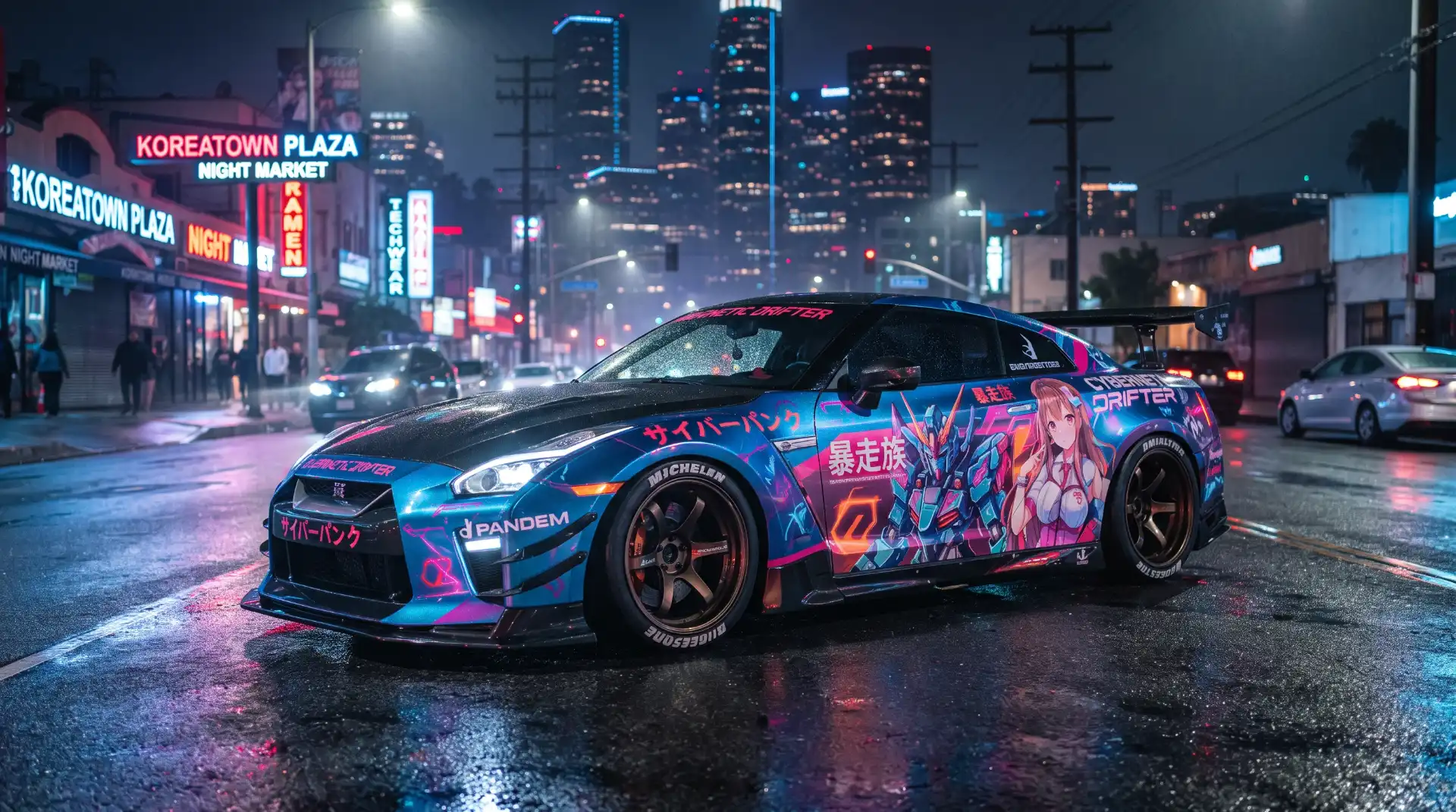
Drawing inspiration from futuristic sci-fi series and mecha classics, these wraps treat the vehicle as if it were a high-tech robotic unit or futuristic street racer. Incorporating intricate mechanical paneling, warning labels, glowing vector accents, and metallic circuit overlays alongside main character portraits, cyberpunk wraps transform sharp modern sports cars into believable props from a near-future metropolis.
3. Minimalist Accent and Livery-Style Wraps
Not every enthusiast wants a full, edge-to-edge character print covering every square inch of their bodywork. Minimalist wraps have exploded in popularity among owners of luxury vehicles and daily commuters who want a refined, subtle look. These designs focus on clean racing liveries, subtle side-skirt graphics, or single-panel hood artwork integrated into factory paint colors. By leveraging negative space and flowing graphic lines that complement the car’s existing bodywork, accent wraps deliver a sophisticated nod to anime culture without overwhelming the vehicle’s structural lines.
4. Pastel Kawaii and Vibrant Pop Art
On the opposite end of the visual spectrum lies the vibrant kawaii aesthetic. Featuring soft pastel color gradients, playful character illustrations, floating cherry blossoms, and cheerful decorative patterns, this style turns vehicles into joyful expressions of color. Popularized across West Coast car shows, kawaii wraps showcase how automotive customization can step away from traditionally aggressive, menacing tropes to celebrate warmth and humor.
Step-by-Step: The Modern Custom Wrap Process
Creating a high-caliber custom anime car wrap is a meticulous engineering and artistic endeavor that requires flawless collaboration between the vehicle owner, a digital illustrator, and a certified vinyl technician. Skimping on any single phase of the production pipeline can ruin an otherwise brilliant visual concept.
Phase 1: Conceptualization and Vector Template Design
The wrapping process begins long before vinyl touches metal. Owners start by collaborating with specialized wrap artists who understand automotive geometry. Using 3D vehicle software templates exact to the make, model, trim level, and year of the specific car, the artist drafts the illustration across a 2D digital canvas.
This stage requires critical spatial planning. A portrait that looks incredible on a flat computer screen can easily be ruined if a character’s face happens to align directly with a door handle cut, a fuel door gap, or a deep bumper intake fold. Professional wrap designers position primary focal points across flat, expansive door panels or hoods while running background patterns across seams and complex body joints.
Phase 2: Material Selection and High-Precision Printing
Once the digital proof is approved, the artwork moves to production. High-grade cast vinyl media is selected based on the desired final sheen—whether gloss, satin, matte, or metallic. The design is printed on large-format digital press machinery using eco-solvent or latex inks calibrated for wide color gamuts. Following printing, the vinyl roll undergoes a crucial gas-off drying period before an over-laminate film is thermally fused over the printed surface to guard against chemical abrasion and solar degradation.
Phase 3: Paint Preparation and Decontamination
The secret to a wrap that lasts seven years versus one that peels in seven weeks lies almost entirely in surface preparation. The target vehicle undergoes a complete multi-stage wash, iron-decontamination treatment, and clay-bar cleaning to remove embedded road grime, waxes, and silicones. Minor body trim pieces, door handles, taillights, and emblems are carefully dismantled to allow wrap installers to tuck vinyl edges cleanly around inner panel lips. Finally, the entire body is wiped down with pure isopropyl alcohol solutions to ensure maximum adhesive bonding.
Phase 4: Precision Application and Post-Heating
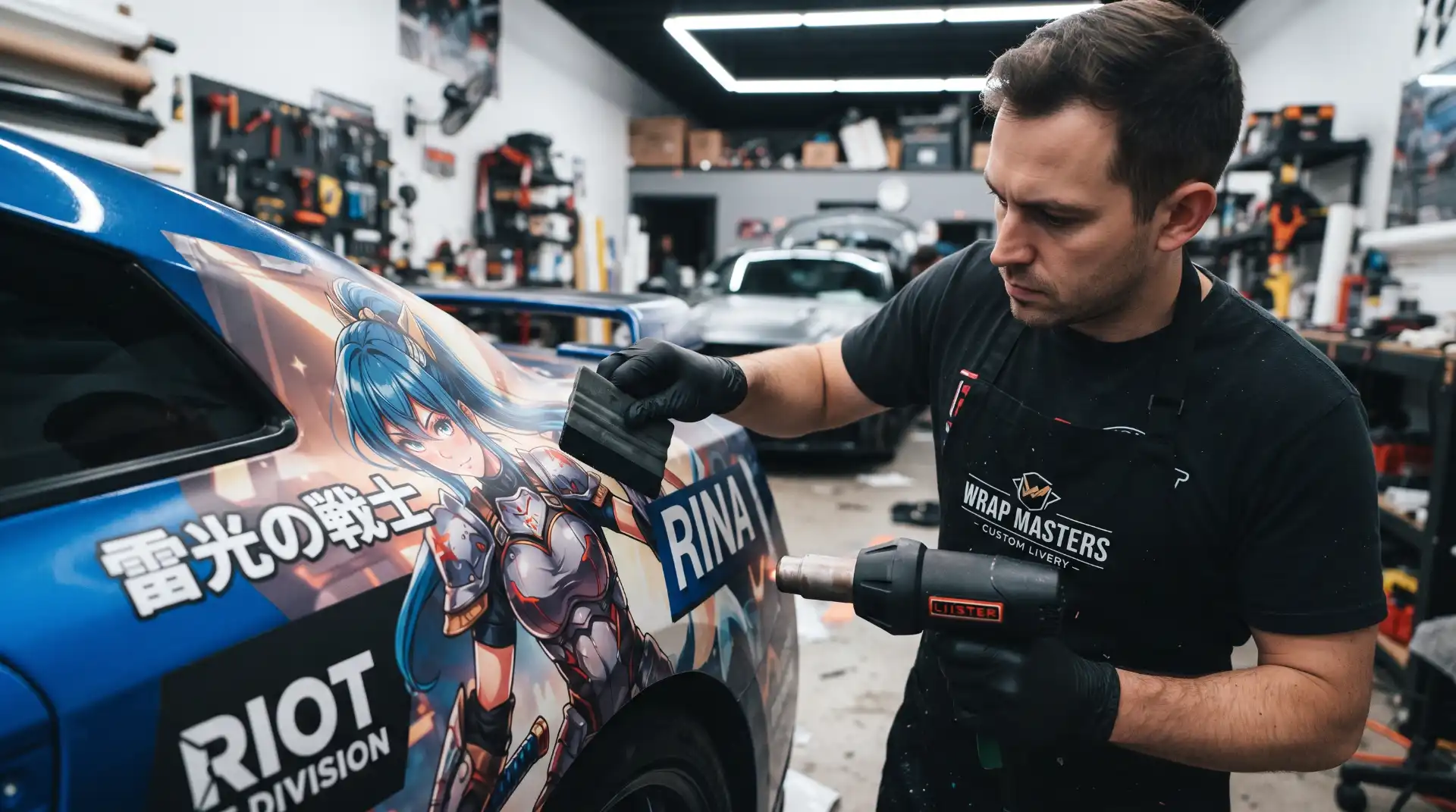
During application, certified wrap technicians position large printed panels using precise alignment markers. Using felt-edge squeegees, they smooth the film onto the bodywork while forcing air out through micro-engineered channels in the vinyl’s adhesive backing. Controlled heat from specialized heat guns is applied to soften the vinyl, allowing it to conform gracefully around deep body contours and body recesses.
The final and most vital technical step is post-heating. Once the vinyl is squeegeed into place, installers heat all stretched edges and recessed channels to roughly 180°F–200°F (82°C–93°C). This process resets the vinyl’s shape memory, ensuring the film will never pull back, bubble, or lift away from deep body grooves over years of hot weather driving.
Maintenance and Care for Long-Term Durability
Investing in a custom anime wrap represents a significant commitment, with professional full-wrap projects typically ranging between $2,500 and $7,000 depending on artwork complexity, vehicle size, and material selection. To ensure printed art stays as vivid as the day it was picked up, proper maintenance protocols are essential.
Owners who preserve their wraps for years generally adhere to four core care habits:
-
Touchless or Hand Washing Protocols: Automated drive-through car washes featuring spinning nylon brushes are absolute enemies of vinyl wraps. The stiff bristles can create microscopic swirl scratches across glossy laminate topcoats or lift outer graphic edges. Hand washing using the two-bucket method with pH-neutral automotive shampoos or using a touchless foam cannon keeps wrap surfaces pristine.
-
Immediate Contaminant Removal: Bird droppings, bug splatter, and tree sap contain acidic compounds that can stain graphic vinyl laminates if left baking under direct sunlight. Keeping a soft microfiber towel and wrap-safe quick detailer spray in the trunk allows drivers to wipe away hazardous spot contaminants immediately.
-
Smart Parking Practices: Although modern UV-blocking laminates provide incredible solar resistance, constant exposure to intense heat degrades any vinyl over time. Parking in covered garages, under carports, or utilizing high-quality breathable car covers when parked outdoors for extended periods significantly extends wrap life.
-
Dedicated Vinyl Ceramic Sprays: Applying specialized ceramic detail sprays formulated for vinyl films every few months adds a durable slick barrier. This enhances hydrophobic performance, prevents road film buildup, and preserves deep saturation levels across character art.
Community, Inclusivity, and the Future of Anime Car Culture
Beyond the technical craft and visual impact, the true reason custom anime car wraps have taken over North America in 2026 comes down to community culture. Historically, the automotive enthusiast world could sometimes feel exclusive or divided by strict subculture boundaries—muscle car purists rarely mixed with JDM tuner crews, and exotic car owners often stayed within closed circles.
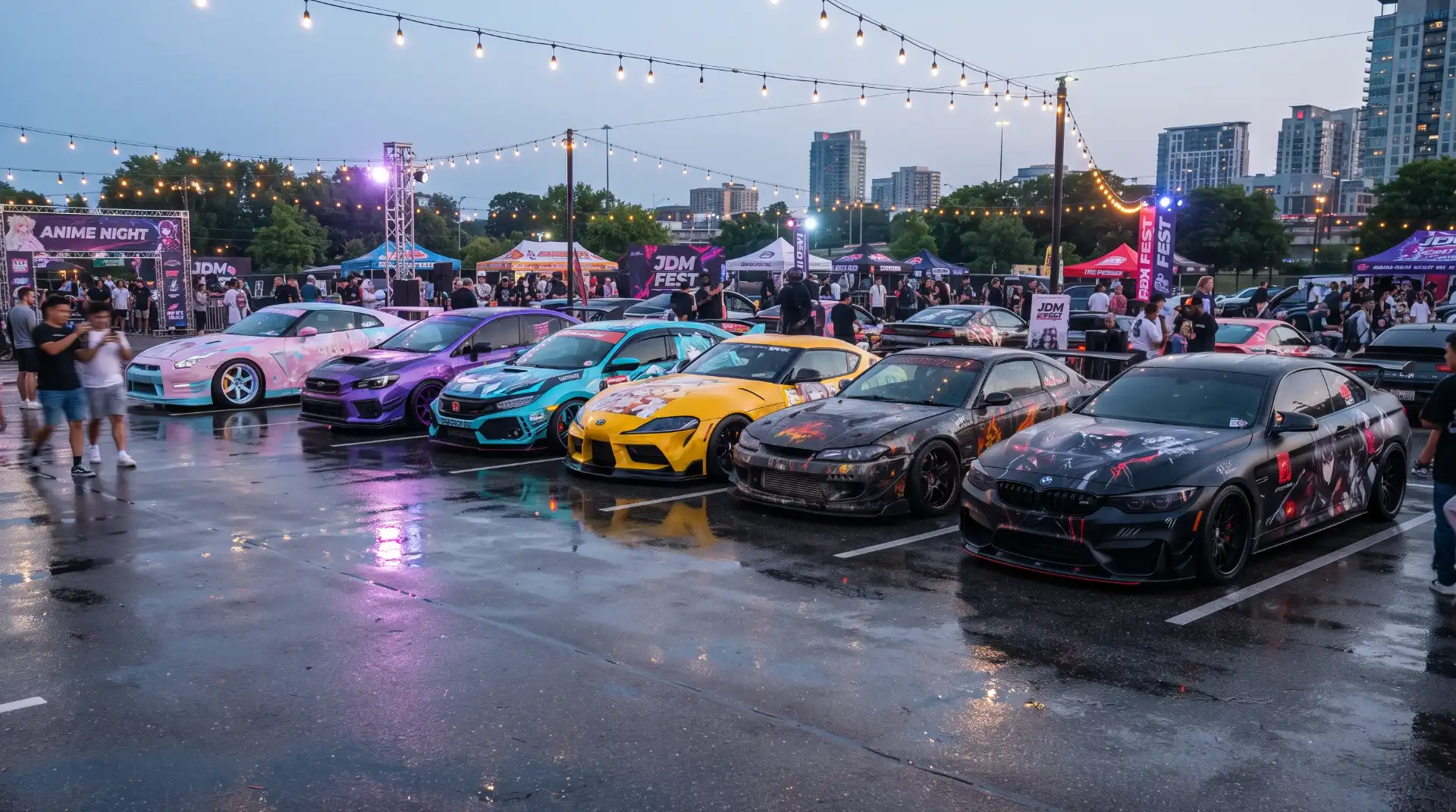
Anime wraps have shattered those traditional barriers. Because anime fandom spans across every demographic, age bracket, and background, an anime car meet brings together an incredibly diverse cross-section of people. At a modern Itasha meet in California or Texas, one might see a custom-wrapped Ford Mustang Shelby parked next to a wrapped Honda Civic Type R, a Tesla Model S, and a vintage Nissan Skyline GT-R. The common thread is no longer what engine sits under the hood, but a shared passion for artistic creativity, storytelling, and mechanical fandom.
As we look further into 2026 and beyond, the line between fine digital art and automotive engineering will only continue to blur. Advances in dynamic vinyl materials, color-shifting inks, and eco-friendly wrap films will make bespoke vehicle graphics even more accessible, durable, and visually captivating.
Custom anime car wraps have proven that they are far more than a passing internet trend. They represent a permanent shift in how drivers interact with their machines—transforming functional transportation into rolling masterpieces of personal identity, artistic freedom, and unbridled passion on the open road.