
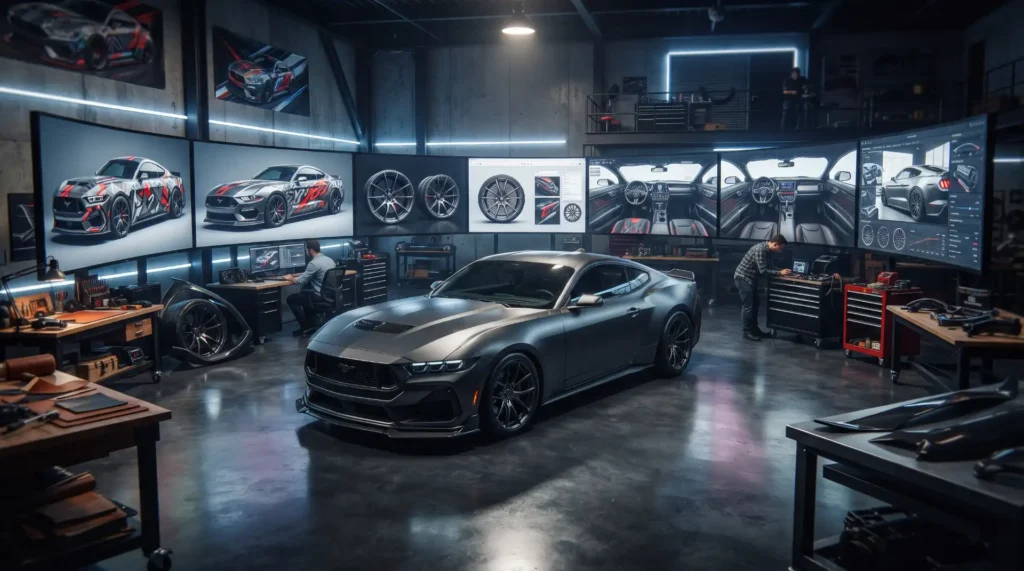
For generations, customizing a vehicle has been one of the most personal ways for American drivers to express themselves. A factory-built car may be designed for the mass market, but the moment an owner changes its wheels, paint, suspension, interior, graphics, lighting, or performance equipment, it begins to become something more individual.
That basic idea has not changed.
What has changed is the technology available to make those personal changes possible.
In 2026, smart car customization is becoming much more than choosing a different paint color or installing a new set of wheels. Modern vehicle personalization can involve artificial intelligence, digital visualization, computer-aided design, advanced vinyl printing, programmable lighting, digital interiors, connected vehicle systems, 3D printing, and software-based features.
The result is a new relationship between automotive culture and technology.
A car can now be designed digitally before physical work begins. An owner can experiment with several visual concepts before committing to a wrap or paint job. Automotive artists can use AI to explore creative directions. Customization shops can use digital tools to communicate more clearly with customers. Digital artwork can be transformed into full-vehicle graphics using advanced printing systems.
Even the vehicle itself is becoming more technologically flexible.
Modern automobiles increasingly rely on software for infotainment, personalization, driver-assistance functions, displays, lighting, connectivity, and other systems. This means that personalization is gradually moving beyond the physical body of the car and into the digital experience inside it.
The American automotive aftermarket is already large enough to demonstrate the importance of personalization. According to the 2026 SEMA Market Report, U.S. consumers spent $52.92 billion on specialty-equipment products in 2025, while approximately one in four vehicle owners purchased accessory or performance products to personalize their vehicles.
That makes smart car customization more than a futuristic idea. It is becoming part of an established American automotive culture.
What Is Smart Car Customization?
Smart car customization is the use of modern digital, electronic, software, design, and manufacturing technologies to personalize the appearance, functionality, or experience of a vehicle.
Traditional customization remains an important part of this process. Paint, wheels, suspension, body modifications, upholstery, airbrushing, performance parts, and custom fabrication are still central to car culture.
Technology does not necessarily replace these methods.
Instead, it gives owners and artists more tools to plan, visualize, produce, and refine customized vehicles.
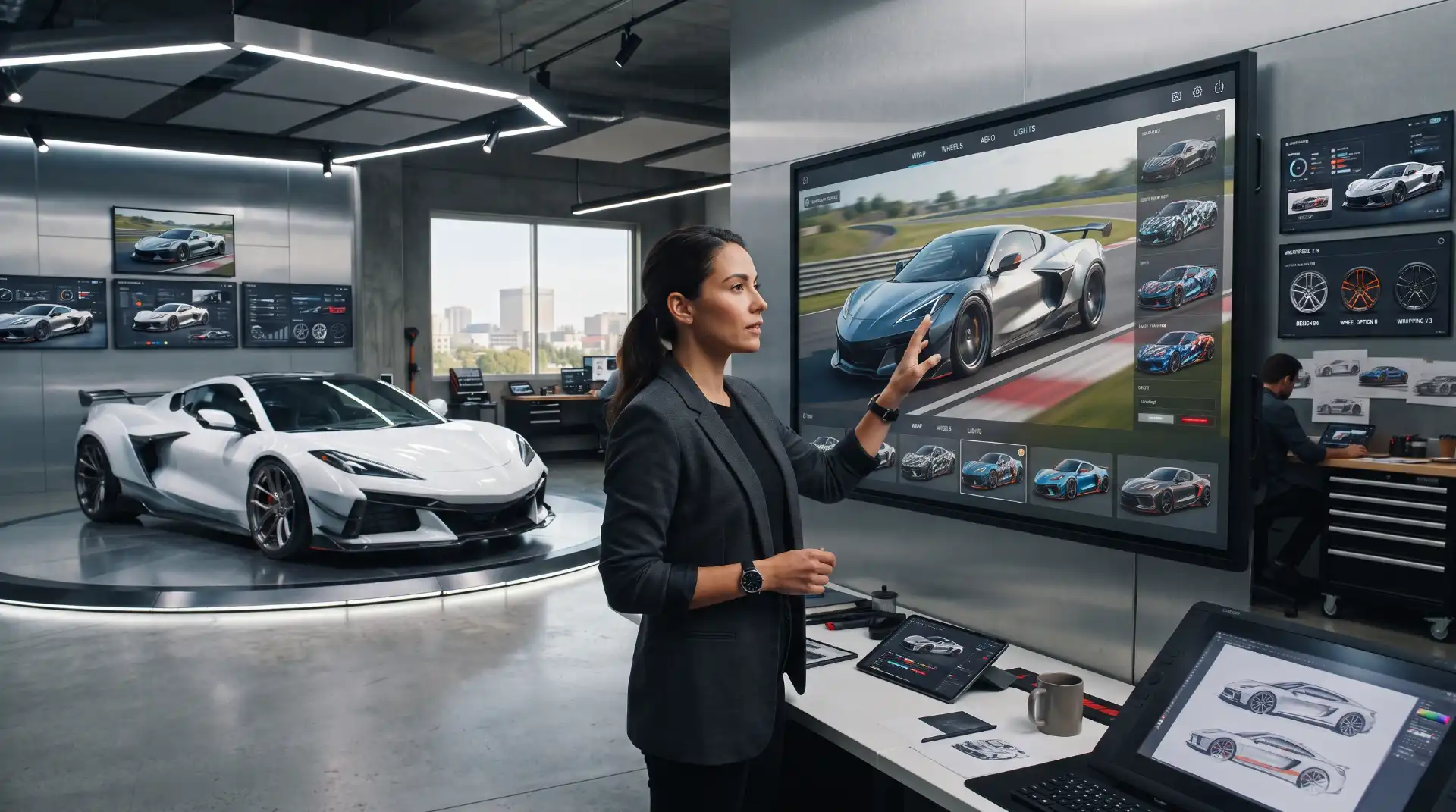
For example, a customer planning a custom wrap can first create several digital concepts. An automotive artist can show the customer different color combinations or graphic styles before the final artwork is produced. A customization shop can use digital measurements to plan how a design will fit around body panels, doors, mirrors, bumpers, and other complicated surfaces.
The same approach can be applied to interiors.
A customer could visualize different seat materials, dashboard finishes, ambient lighting concepts, digital display layouts, and trim combinations before spending money on physical components.
Smart customization therefore changes the process as much as it changes the final vehicle.
The car owner does not necessarily have to make a single decision and hope the result looks right. Digital tools can provide opportunities to experiment before the physical transformation begins.
 Why Vehicle Personalization Remains Strong
Vehicle personalization has deep roots in American automotive culture.
Classic American hot rods, muscle cars, lowriders, custom trucks, off-road vehicles, sports cars, import builds, restored classics, and show cars have all developed their own customization traditions.
In many cases, the vehicle is not simply transportation.
It is a form of identity.
A customized truck can reflect an owner’s interest in outdoor recreation. A restored muscle car can express an appreciation for automotive history. A custom sports car can represent performance and design. A detailed wrap can turn a daily driver into a mobile work of art.
Technology gives these traditions new possibilities.
SEMA’s 2026 research shows that vehicle personalization extends well beyond dedicated show cars. The organization reported that most consumers purchasing aftermarket products are modifying everyday drivers rather than only specialized project vehicles. More than half of accessory and performance parts buyers are also under the age of 40.
This is important because younger American drivers have grown up surrounded by digital design, smartphones, gaming, social media, AI tools, and online automotive communities.
For these drivers, digital technology is not separate from car culture.
It is part of car culture.
That makes digitally assisted customization a natural development rather than a complete departure from traditional automotive enthusiasm.
Artificial Intelligence Is Changing the Design Process
Artificial intelligence is one of the most visible technologies influencing automotive customization in 2026.
AI image-generation tools can help turn broad ideas into visual concepts. A customer may have a general idea for a futuristic sports car, a retro-inspired truck, an anime-themed vehicle, or a modern interpretation of a classic American muscle car.
Instead of relying only on verbal descriptions, AI can help produce visual references.
This does not mean that an AI-generated image should automatically become the finished vehicle design.
Real automobiles have physical dimensions, complex body shapes, materials, engineering limitations, safety requirements, and manufacturing constraints.
AI is most useful when it becomes part of the creative process.
For example, an owner could explore five different concepts and discover that they prefer the color scheme from one concept, the graphics from another, and the minimalist approach of a third.
A professional artist can then combine those ideas into a coherent design.
Cars-Art.com has already explored this development in its article AI Car Design in 2026: How Artificial Intelligence Is Changing Automotive Art and Customization, which examines how AI is becoming a creative tool for automotive designers and enthusiasts.
This represents an important shift.
AI does not have to replace the artist.
It can help the artist explore more possibilities.
Digital Visualization Can Help Owners Make Better Design Decisions
One of the biggest advantages of smart car customization is visualization.
Many customization decisions are difficult to imagine from descriptions alone.
An owner may wonder whether a dark matte finish will look better than gloss. They may be uncertain about a large graphic on the hood. They may want to know whether a certain wheel style complements the vehicle’s body lines.
Digital visualization can provide a preview.
This is particularly useful for expensive projects.
A full vehicle wrap, custom paint job, interior conversion, or extensive body modification can represent a significant financial commitment. Being able to compare concepts before work begins can help reduce uncertainty.
Visualization can also improve communication between customers and professionals.
Instead of saying, “I want something more aggressive,” a customer can identify visual examples and explain exactly which characteristics they prefer.
The designer can then refine those elements.
This creates a more collaborative process.
The technology does not make the design decision for the owner. It provides better information for the owner and artist to discuss.
Smart Car Customization Is Changing the Wrap Industry
Vinyl wraps are one of the areas where digital technology has had an especially visible impact.
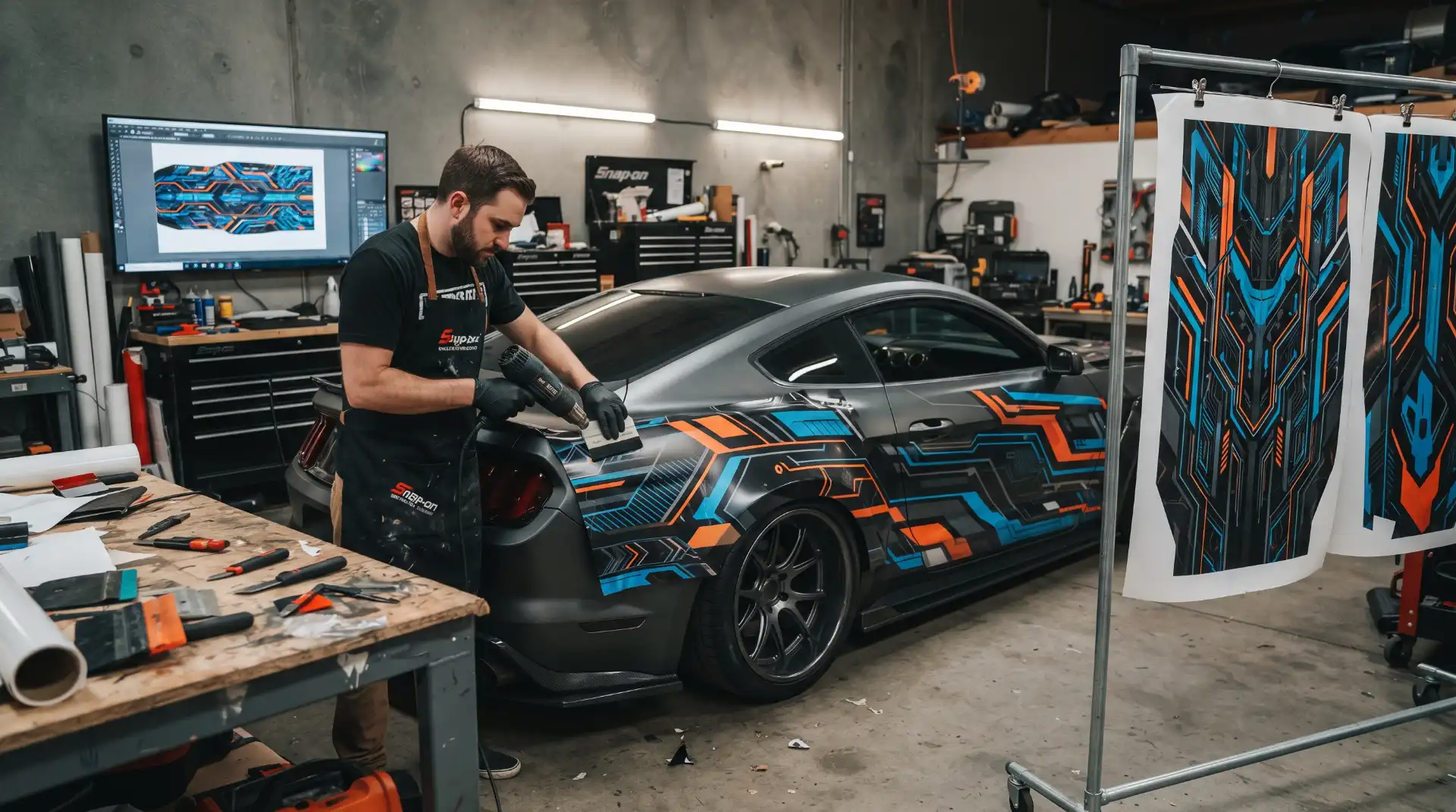
Modern digital printing allows highly detailed artwork to be reproduced across large areas of vinyl. This gives designers the ability to create graphics that would have been extremely difficult or expensive to reproduce using traditional methods.
The process often begins digitally.
An artist develops the artwork on a computer and adapts it to the dimensions and shape of a specific vehicle. The design can then be printed on specialized automotive vinyl before professional installation.
Modern wrap materials also offer a variety of finishes.
Depending on the product, an owner may choose from gloss, satin, matte, metallic, textured, or other visual effects.
This means customization is no longer limited to a simple change of color.
A vehicle can become a moving piece of graphic artwork.
That development is particularly important for automotive art because the entire vehicle becomes part of the composition.
 Anime Car Wraps Demonstrate the Power of Digital Automotive Art
The popularity of anime-inspired car wraps provides an excellent example of how technology and culture are converging.
Cars-Art.com recently covered Why Custom Anime Car Wraps Are Becoming More Popular in 2026, examining the relationship between digital culture, automotive personalization, printing technology, and American car culture.
Anime wraps are especially interesting because they transform the vehicle into a storytelling surface.
Instead of simply changing the color of a car, the owner can create an entire visual theme.
Characters, illustrations, patterns, typography, manga-inspired artwork, futuristic graphics, and other visual elements can be integrated into a single vehicle design.
Digital printing makes this type of customization considerably more practical than it would have been in earlier decades.
The result is a form of personalization that is both automotive and digital.
The vehicle becomes an extension of the owner’s interests.
This same principle can apply to gaming-inspired vehicles, motorsport themes, comic-book artwork, retro graphics, abstract designs, and original digital illustrations.
The Vehicle Is Becoming a Digital Canvas
The idea of a car as a canvas is not new.
Automotive artists have been using vehicle bodies for decades.
Airbrush artists, pinstripers, muralists, painters, illustrators, and photographers have all contributed to the visual culture surrounding automobiles.
Technology expands the canvas.
A design can now begin as a digital concept, be refined through computer software, transformed into printable artwork, and ultimately applied to the physical vehicle.
Cars-Art.com’s article From Concept to Canvas: The Process Behind Creating Automotive Art explores this creative journey, including concept development, design refinement, vehicle preparation, artistic execution, and final finishing.
Smart customization adds another layer to that process.
Digital tools can allow more experimentation before the physical artwork is created.
This is especially useful when a customer wants something highly personalized.
Rather than choosing a generic design from a catalog, the customer can participate in developing an original visual identity for the vehicle.
Smart Lighting Is Becoming Part of Vehicle Personalization
Lighting has also become an important part of modern vehicle customization.
LED technology allows designers and owners to experiment with lighting environments that would have been difficult to create using older lighting systems.
Interior ambient lighting can dramatically change how a vehicle feels at night.
A subtle lighting setup may create a premium atmosphere, while a more expressive design may emphasize the vehicle’s show-car character.
Exterior lighting can also contribute to visual identity, although any modification must comply with applicable road-use requirements.
From an artistic perspective, lighting adds another layer to the vehicle.
A custom wrap can look different depending on the lighting surrounding it. Metallic finishes can reflect light differently from matte surfaces. Interior artwork can become more dramatic when paired with carefully selected ambient lighting.
The result is a vehicle that changes visually depending on the environment.
Digital Interiors Are Becoming Another Customization Opportunity
Customization is no longer limited to what people see when they walk past the vehicle.
The interior is becoming increasingly important.
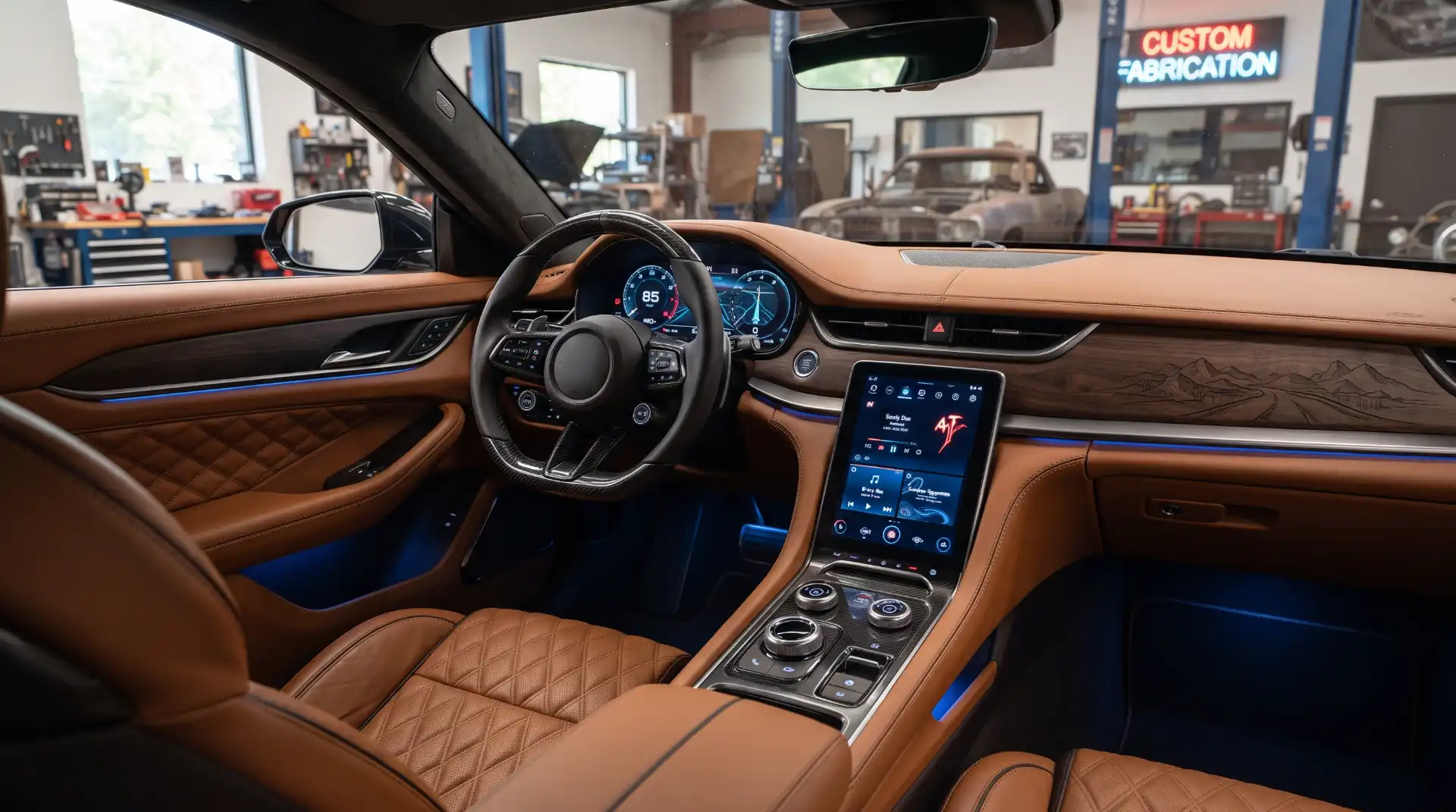
Modern cars may include large digital displays, configurable instrument panels, smartphone connectivity, voice controls, ambient lighting, advanced audio systems, and personalized settings.
This creates opportunities for interior customization.
An owner might choose custom upholstery, unique trim, specialized lighting, personalized display themes, or an artistic dashboard treatment.
Classic cars can also benefit from this approach.
A vintage vehicle can retain its historical appearance while receiving carefully selected modern technology.
This creates a restomod-style approach in which traditional automotive character is combined with modern convenience.
The same philosophy can be applied to newer vehicles.
The objective is not to make every interior look futuristic.
Instead, technology can be used to create a cabin that better matches the owner’s preferences.
Software Is Becoming Part of Vehicle Personalization
One of the most important developments in the automotive industry is the growth of software-defined vehicles.
Traditionally, customizing a vehicle meant physically changing it.
Software introduces another possibility.
Modern vehicles can use software to control displays, infotainment, vehicle settings, connectivity, driver-assistance functions, and other systems.
As vehicles become more software-driven, personalization can increasingly involve digital settings as well as physical components.
This creates an interesting question about the future of customization.
Will a customized vehicle eventually be defined partly by the software experience its owner chooses?
It is possible that future vehicle personalization will combine physical modifications with digital preferences.
A customized vehicle might have a unique exterior wrap, personalized interior lighting, a particular digital interface, and software-based settings tailored to the driver’s preferences.
This would make personalization a continuous process rather than a one-time modification.
3D Printing Could Make One-Off Customization Easier
Additive manufacturing, commonly known as 3D printing, is another technology with potential applications in automotive customization.
Traditional aftermarket manufacturing often depends on tooling and mass production.
That can make small quantities of unusual components expensive.
3D printing can provide a different approach for certain applications.
A designer can create a digital model and manufacture a small number of parts without requiring the same type of traditional tooling.
For automotive enthusiasts, this could be useful for certain interior accessories, trim components, brackets, decorative pieces, organizers, display mounts, and other non-safety-critical parts.
The technology is especially interesting for one-off builds.
If an owner wants something that does not exist as a standard aftermarket product, digital manufacturing can potentially make the idea easier to produce.
However, material selection remains important.
A 3D-printed component should not automatically be assumed to be suitable for structural, high-temperature, impact-sensitive, or safety-critical applications.
Professional engineering and appropriate testing remain essential.
AI Can Improve Communication Between Customers and Designers
One of the less obvious advantages of AI-assisted design is better communication.
Customers often know what they want emotionally but struggle to describe it technically.
Someone might say that they want their vehicle to look “clean but aggressive,” “modern but classic,” or “futuristic without looking unrealistic.”
These descriptions can mean different things to different people.
Visual concepts can make the conversation easier.
A designer can generate or develop several directions and ask the customer which characteristics they prefer.
Perhaps the customer likes the color of one concept but dislikes the graphics.
Maybe they like the shape of the artwork but want a more restrained approach.
The designer can then refine the concept.
This makes customization more collaborative.
Instead of a customer simply approving or rejecting a final design, they can participate throughout the development process.
Social Media Is Accelerating Automotive Design Trends
Social media has dramatically changed the way automotive trends spread across the United States.
A unique vehicle can be photographed at a car meet and shared online within minutes.
A creative wrap can reach viewers thousands of miles away.
A new wheel style can become popular through videos and photographs.
An unusual interior can inspire other enthusiasts.
This creates a much faster feedback loop than traditional automotive magazines or local car clubs could provide.
Technology therefore influences both the creation and distribution of automotive customization.
A designer can create a digital concept, publish it online, receive feedback, refine it, and eventually produce the physical vehicle.
The finished car can then become content that inspires the next project.
This cycle is helping create a more connected American customization community.
Pickup Trucks Are a Major Part of the Customization Market
Smart customization is not limited to sports cars.
Pickup trucks are an enormous part of the American aftermarket.
SEMA’s 2026 research found that pickup-related accessories and performance products represented approximately 30% of specialty-equipment sales in 2025, with more than $15 billion spent modifying pickups.
That makes trucks an important platform for customization.
Truck owners may personalize their vehicles for work, recreation, off-road use, appearance, or a combination of purposes.
Technology can support each category.
Digital visualization can help plan a custom exterior.
AI can assist with graphic concepts.
LED lighting can create new visual effects.
Digital fabrication can support specialized accessories.
Smart interior technology can improve usability.
The result is a vehicle that combines practical function with personal style.
Electric and Hybrid Vehicles Create New Design Opportunities
The growth of electric and hybrid vehicles is also creating new opportunities for automotive artists.
Electric vehicles often have different proportions and design characteristics from traditional internal-combustion vehicles.
Their quieter operation and increasingly software-driven systems also create different customization possibilities.
Hybrid vehicles occupy another interesting position.
SEMA’s 2026 research indicates that electric and hybrid vehicles together represent more than 15% of new-vehicle sales, while internal-combustion vehicles remain important to the U.S. market.
For automotive artists, this means there is no single future vehicle type.
The American customization market will continue to include gasoline-powered vehicles, hybrids, EVs, trucks, SUVs, sports cars, classics, and many other platforms.
That diversity gives automotive designers an unusually broad creative field.
The Importance of Human Craftsmanship
The increasing use of technology does not make traditional automotive craftsmanship irrelevant.
In many ways, technology makes craftsmanship more valuable.
An AI system can generate a concept, but an experienced artist understands composition and proportion.
A computer can create a graphic, but a wrap installer understands how material behaves around complex body contours.
A 3D printer can manufacture a component, but an experienced technician knows whether it is appropriate for a particular application.
A digital visualization can show a possible interior, but an upholstery specialist understands materials, fit, durability, and finishing.
The strongest customization projects combine these capabilities.
Technology can accelerate experimentation.
Human expertise turns that experimentation into something practical.
Smart Customization Should Start With a Clear Concept
One potential problem with modern technology is having too many options.
AI can generate hundreds of ideas.
Digital visualization can show dozens of color combinations.
Online marketplaces can provide thousands of aftermarket products.
More choices do not automatically create a better vehicle.
A strong customization project should begin with a clear concept.
The owner should consider how the vehicle will be used, what kind of visual identity they want, how permanent the modifications should be, and what budget is appropriate.
A daily commuter has different requirements from a dedicated show car.
A restored classic requires different priorities from a modern EV.
A work truck has different needs from a weekend sports car.
Once the purpose is clear, technology becomes much more useful.
The tools can support the concept rather than creating unnecessary complexity.
Safety Should Remain Part of Smart Car Customization
Customization should always be approached with safety in mind.
This is particularly important when modifications affect lighting, visibility, electronic systems, driver-assistance sensors, vehicle controls, or structural components.
Modern vehicles may depend on cameras, radar, ultrasonic sensors, and other systems to provide driver-assistance functions.
Changes to the vehicle should not unintentionally interfere with these systems.
Similarly, exterior lighting should remain appropriate for legal road use.
Interior modifications should not block the driver’s view or interfere with essential controls.
A visually impressive modification is not successful if it creates a safety problem.
Smart customization therefore means more than using the latest technology.
It means understanding how that technology interacts with the vehicle.
Privacy Is Becoming a Customization Consideration
Connected vehicles introduce another issue that traditional car customization rarely had to consider: data privacy.
Modern cars can connect with smartphones, applications, navigation services, cloud systems, and other digital platforms.
That connectivity can provide useful personalization, but it also means owners should understand what information is being collected and how it is being used.
As vehicles become increasingly software-driven, digital privacy will become more relevant to the ownership experience.
Customization is therefore expanding into an area that is not entirely visual.
The future enthusiast may care not only about how a vehicle looks but also about how its connected systems operate.
Smart Customization and the Future of Automotive Art
Automotive art has always evolved alongside technology.
Airbrushing expanded what artists could create on vehicle surfaces.
Digital illustration made complex artwork easier to develop.
Vinyl printing made large-scale graphics more accessible.
Computer-aided design changed how automotive concepts could be visualized.
Now artificial intelligence is adding another tool to that progression.
The future of automotive art may involve a combination of AI-assisted concepts, digital illustration, physical painting, printed graphics, advanced materials, lighting, digital interiors, and traditional craftsmanship.
That does not mean every car needs to become futuristic.
Technology can also be used to recreate historical styles.
An artist might use modern digital tools to design a vintage-inspired mural.
A classic truck might receive a digitally designed pinstriping pattern.
A modern sports car could receive graphics inspired by historic racing liveries.
Technology can therefore help preserve automotive history while creating new interpretations of it.
 The Difference Between Smart Customization and Over-Customization
There is an important distinction between using technology intelligently and simply adding technology everywhere.
A successful customized vehicle does not necessarily have the most screens, lights, graphics, or electronic features.
Sometimes the strongest design is relatively simple.
A carefully selected color combination, a tasteful graphic, custom wheels, and subtle interior improvements may create a more coherent vehicle than dozens of unrelated modifications.
Smart customization is about choosing the right tools for the desired result.
Technology should serve the design.
The design should not exist simply to demonstrate the technology.
This principle is particularly important for automotive art.
A vehicle should remain visually coherent.
The best projects usually have a recognizable theme, consistent colors, thoughtful proportions, and a clear connection between the different modifications.
What the Future Could Look Like
The future of smart car customization could be increasingly interactive.
A customer may begin with a photograph or digital model of their own vehicle.
AI could then generate several design directions.
A professional designer could refine those concepts.
A digital visualization could show how the finished vehicle might look from different angles.
The final artwork could be produced through digital printing or physical craftsmanship.
Interior elements could be manufactured using advanced fabrication.
Lighting could complement the exterior design.
Software settings could personalize the driving environment.
The completed vehicle could then be photographed and shared online, creating inspiration for other enthusiasts.
This entire process could become faster and more collaborative.
Yet the basic purpose would remain the same.
People customize cars because they want something that feels like their own.
Why Smart Car Customization Matters to American Car Culture
American automotive culture has always been about more than transportation.
Cars represent freedom, creativity, engineering, history, competition, community, and personal expression.
Smart technology is not changing that fundamental relationship.
It is expanding the tools available to express it.
A California enthusiast can use digital art to create a custom wrap.
A Texas truck owner can visualize a complete exterior transformation before installation.
A Michigan classic-car collector can combine vintage design with modern technology.
A Florida sports-car owner can experiment with custom digital artwork.
A New York enthusiast can develop a personalized interior concept using modern visualization tools.
The geographic diversity of the United States means that there will never be a single definition of automotive customization.
Technology simply gives each community more ways to express its own style.
Final Thoughts: The Future of Vehicle Personalization Is Digital and Physical
Smart car customization represents a major evolution in how Americans can personalize their vehicles.
Traditional customization remains important. Paint, wheels, bodywork, airbrushing, upholstery, performance modifications, restoration, and fabrication continue to define automotive culture.
But digital technology is expanding the possibilities.
Artificial intelligence can help generate ideas.
Digital visualization can help owners make decisions.
Advanced printing can transform artwork into vehicle graphics.
Smart lighting can change the atmosphere of an interior.
Software can influence the digital driving experience.
3D printing can support specialized components.
Connected technology can introduce new forms of personalization.
The U.S. aftermarket provides strong evidence that consumers continue to value vehicle personalization. SEMA’s 2026 Market Report found that approximately one in four vehicle owners purchased accessory or performance products for personalization during 2025, while the overall specialty-equipment market reached $52.92 billion.
These developments suggest that customization is not disappearing as vehicles become more technologically advanced.
It is evolving.
The most exciting future is probably not one in which technology replaces automotive artists, builders, fabricators, or enthusiasts.
Instead, technology can give these people better tools.
An AI system can provide inspiration.
A designer can turn that inspiration into a practical concept.
An artist can give the concept personality.
A technician can transform the design into a physical vehicle.
The owner can ultimately decide what the vehicle represents.
That human element remains the heart of automotive customization.
Cars have always been canvases for personal expression, and modern technology is simply giving those canvases new dimensions.
As digital design, artificial intelligence, advanced materials, software, and connected vehicle technology continue developing, smart car customization will likely become an increasingly important part of American automotive culture.
The future vehicle may not simply be customized once.
It may be continuously designed, refined, updated, and personalized throughout its life.
For automotive enthusiasts, that means the boundary between car design, technology, and art is becoming more interesting than ever.